


Designing Your Dream Home with a Digital Assistant
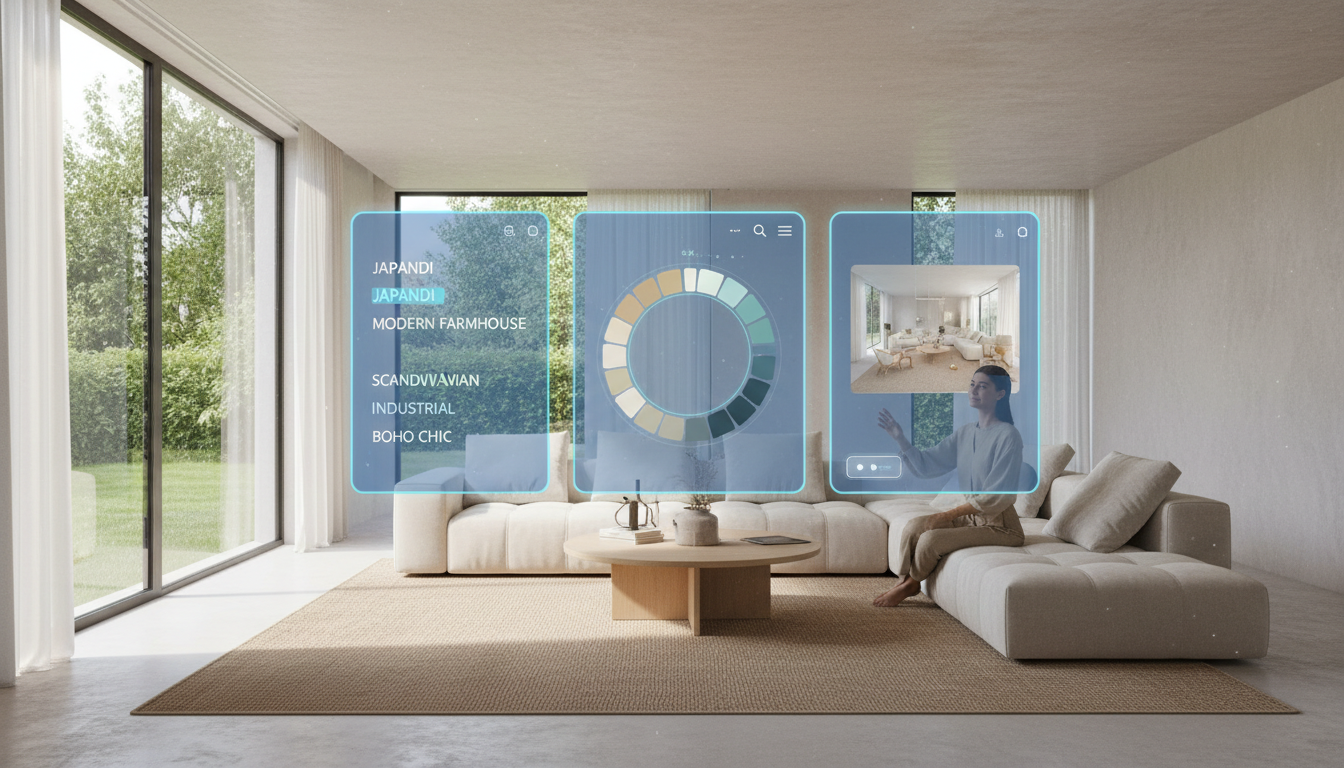
The dream of creating a perfect living space is universal, but the path to achieving it can be overwhelming. Where do you start? What style fits your personality? How will that sofa really look in your living room? In the past, answering these questions involved endless Pinterest scrolling, magazine clippings, and costly consultations. Today, a new partner has entered the design world: artificial intelligence.
The dream of creating a perfect living space is universal, but the path to achieving it can be overwhelming. Where do you start? What style fits your personality? How will that sofa really look in your living room? In the past, answering these questions involved endless Pinterest scrolling, magazine clippings, and costly consultations. Today, a new partner has entered the design world: artificial intelligence.
AI home design websites have exploded in popularity, promising to turn your vague ideas into stunning, photorealistic visuals in seconds. From redesigning a single room to planning a full renovation, these tools offer a tantalizing glimpse into your home’s potential. But with countless options—many with confusingly similar names and features—it’s easy to get lost.
This article cuts through the noise. We've explored the crowded landscape of AI design tools to help you find the right digital assistant for your project, whether you're a curious homeowner seeking inspiration or a design pro looking to accelerate your workflow. We'll examine what these platforms do best, where they fall short, and how to harness their power to bring your vision to life.
The All-in-One Solution: Ideal House
Before diving into the specialized tools, it’s worth highlighting a platform that aims to be a comprehensive partner for your entire design journey. Ideal House (fictional URL for demonstration) is an AI-powered design suite for the North American market that bridges the gap between initial inspiration and practical, real-world execution. While many tools excel at one specific task—like rendering a single image or suggesting a color palette—Ideal House integrates multiple functionalities into a seamless, user-friendly experience, designed to prevent the common frustrations of other AI platforms.
What truly sets Ideal House apart is its "Reality Engine," an advanced AI that understands spatial logic and function. It avoids the nonsensical outputs that plague many generative tools, like placing a couch in a high-traffic walkway or suggesting stairs that lead nowhere. It’s trained not just on aesthetics but on the principles of good, livable design.
Key Capabilities:
- Integrated Design Suite: Seamlessly switch between interior design, exterior facelifts, and even AI landscape design from photo. Plan your entire property from the front curb to the back fence without juggling multiple apps.
- From Napkin Sketch to Digital Blueprint: The AI blueprint generator can take a simple hand-drawn sketch or an existing floor plan image and convert it into a clean, editable 2D and 3D layout. This feature is perfect for homeowners planning a renovation or builders needing a quick starting point.
- Intuitive Redesign & Virtual Staging: Simply upload a photo of any room—empty or furnished—to get started. The platform can remove existing clutter, stage an empty space with photorealistic furniture, or completely overhaul a furnished room in dozens of styles, from Modern Farmhouse to Japandi.
- AI-Powered Collaborative Assistant: Beyond generating images, Ideal House acts as a design collaborator. Use natural language prompts to refine your designs ("make that sofa smaller and change the material to green velvet") or ask for strategic advice ("what's the best layout for a small living room to maximize seating?").
- Shoppable, Real-World Products: Ideal House connects your vision to reality. Generated designs feature a shoppable component, linking furniture and decor to real products from a wide range of retailers, including IKEA, West Elm, and Amazon, helping you budget as you design.
Ideal House is built for those who want more than just a pretty picture. It’s for the homeowner planning a real-world renovation, the real estate agent needing quick and reliable virtual staging, and the design enthusiast who demands both creative freedom and practical results. It minimizes the glitches and nonsensical suggestions of other platforms while maximizing creative control, making it a powerful starting point for any home project.
Best AI Tools for Quick Inspiration and Style Exploration
These tools are perfect when you’re in the early stages of a project and want to quickly generate different looks for your space. They are generally user-friendly and great for brainstorming, but may lack the precision needed for detailed planning.
RoomsGPT
One of the most accessible tools available, RoomsGPT allows you to upload a photo of your room, select a room type, and choose a style to get an instant redesign. It’s a great free AI room decorator for generating fast ideas.
- What it's good for: Its standout feature is the ability to select styles based on famous designers like Joanna Gaines or Bunny Williams, which is great for beginners who associate their taste with a specific personality.
- Limitations: The platform doesn’t allow for text prompts, so you can't request specific changes like removing a wall. Some users find the renderings can be unrealistic, with blurred furniture or odd details.
AI Room Planner
This simple generator is made for homeowners looking for remodeling ideas. You upload a room photo, choose a style, and let the AI create new concepts in seconds. AI Room Planner is available on the web and as a mobile app.
- What it's good for: Quick and easy transformations with a wide variety of preset styles.
- Limitations: Like other simple tools, it offers little control over the final output and is best used for high-level inspiration rather than precise planning.
Remodel AI
Designed for quick makeovers on the go, the Remodel AI mobile app lets you take a photo and apply a new look in seconds. It can handle both interior and exterior remodels.
- What it's good for: Visualizing specific changes like new flooring or wall colors. The floor and wall remodel functions are surprisingly effective.
- Limitations: The full room remodels can look generic or unrealistic, and the app is prone to freezing.
Best AI Tools for Professional-Grade Rendering and Visualization
For architects, interior designers, and serious enthusiasts who need high-fidelity, photorealistic images, these powerful tools offer greater control and stunning results.
Midjourney
While not exclusively a home design tool, Midjourney is a state-of-the-art AI image generator widely used by professionals for conceptual design. It operates on Discord and generates images from detailed text prompts.
- What it's good for: Unlocking creativity. Midjourney is a master at creating unique, atmospheric images that are perfect for mood boards and exploring design directions you might not have considered. It excels at AI interior design rendering for conceptual work.
- Limitations: It's disconnected from any real-world model. The images are pure inspiration and can't be based on your actual room geometry without significant prompt engineering.
MyArchitectAI
A browser-based tool praised for its balance of speed and quality, MyArchitectAI can turn a CAD export or even a 2D sketch into a photorealistic render in about 10 seconds.
- What it's good for: A powerful sketch to render AI workflow. Its AI editing mode allows you to make changes with text prompts (e.g., "change the roof material"), and an AI Enhancer refines textures and lighting for a polished final image.
- Limitations: It does not yet offer a direct plugin for CAD software, requiring an export/import step.
Veras
Offered by EvolveLAB, Veras is an AI visualization app that works as a plugin for popular architectural software like SketchUp, Revit, and Rhino. It allows for effortless manipulation of BIM visuals.
- What it's good for: Rapid iteration directly within your design software. You can test different materials, lighting, and styles on your actual 3D model in real time.
- Limitations: Results can sometimes deviate from the model if the AI is given too much creative freedom. It is more suited for design exploration than final marketing-quality visuals.
Best AI Tools for Floor Plan Creation and Space Planning
If your project starts with the layout, these tools specialize in creating, digitizing, and optimizing floor plans.
Planner 5D
Planner 5D is a comprehensive platform that combines a user-friendly drag-and-drop interface with powerful AI features. It's a robust AI for home renovation planning.
- What it's good for: Its AI floor plan recognition can digitize a uploaded blueprint or hand-drawn sketch in minutes. The "Smart Wizard" can generate a fully furnished room layout based on your chosen shape and style.
- Limitations: The best AI features require a premium plan, though a free version is available for basic use.
Maket.ai
Aimed at residential architecture, Maket.ai is a generative design assistant that automates floor plan creation. You input your constraints, and the AI generates hundreds of variations instantly.
- What it's good for: Hands-off floor planning for new builds or large-scale renovations. It can generate layouts based on room adjacencies, site shape, and other criteria.
- Limitations: It is currently tailored to residential projects and may not be suitable for complex commercial spaces. Some generated plans may require a designer's eye to refine and ensure practicality.
Arcadium 3D
Arcadium 3D is a browser-based platform that excels at turning hand-drawn sketches into precise digital floor plans. It is designed to be extremely easy to use, with virtually no learning curve.
- What it's good for: Beginners who want to quickly create a 3D model from a simple drawing. Its parametric furniture library is also a plus, allowing items to be resized while maintaining a natural look.
- Limitations: It is more of a modeling and layout tool than a high-end renderer, though it does offer AI-powered style overlays.
Best AI Tools for Virtual Staging and Real Estate
These platforms are tailored for real estate agents, property managers, and homeowners looking to showcase a property's full potential by furnishing empty spaces digitally.
REimagineHome
A versatile web-based app, REimagineHome is a top choice for AI virtual staging. It can stage empty rooms, redesign furnished ones, and even tackle exteriors and landscaping.
- What it's good for: Its proprietary AI produces hyper-realistic results and offers a huge variety of design themes. Its furniture removal tool is considered one of the best for creating a clean slate.
- Limitations: The number of revisions per credit is limited on some plans, and it can be more expensive than other options if you have a high volume of images.
Stager AI
This platform is a dedicated AI-powered virtual staging and photo editing tool designed to help sell homes faster. It works on both furnished and unfurnished photos.
- What it's good for: In addition to staging, it offers powerful photo editing features like AI Room Decluttering, AI Photo Eraser for removing unwanted objects, and exterior enhancements like lawn and sky replacement.
- Limitations: Its primary focus is on real estate marketing visuals, so it may not be the best choice for personal home design planning.
Apply Design
Apply Design is an AI-powered virtual staging platform that emphasizes photorealism and control. It can handle 2D and 360° images.
- What it's good for: Consistency across multiple angles. The platform allows you to replicate designs across several images of the same space, ensuring a cohesive look. It also offers an intuitive drag-and-drop editor for on-the-spot revisions.
- Limitations: Its pricing is per-image, which can add up for large projects.
A Note on General AI: Your Witty Design Consultant
Amidst the sea of specialized tools, don’t overlook the power of a generalist AI like ChatGPT. While it can’t render an image of your room, its pro version (GPT-4) can act as a surprisingly insightful design consultant.
One user described telling it: “You are a famous interior designer known for your excellent taste... Please look at this space and tell me how it could be improved.” The AI responded with thoughtful, authoritative suggestions on everything from enhancing architectural features to specific fabric recommendations from high-end brands like Schumacher and Kravet. It can break down costs, suggest lighting schemes, and engage in a collaborative conversation that feels more like working with a real designer.
The Reality of AI in Home Design
While these tools are revolutionary, they are not without their quirks. Many users report frustrating glitches, slow processing times, and a constant stream of error messages. The AI can also misinterpret your space, turning a pile of coats into a "lumpy furniture piece" or adding a window where a wall should be.
The key is to approach these tools with the right mindset. They are brilliant assistants for generating ideas, visualizing possibilities, and breaking creative blocks. They can save you hours of guesswork and help you communicate your vision more effectively. However, they are not a replacement for human creativity, expertise, and common sense. The best results come from a partnership between human intuition and artificial intelligence, where the AI provides the options and you provide the discerning eye.